


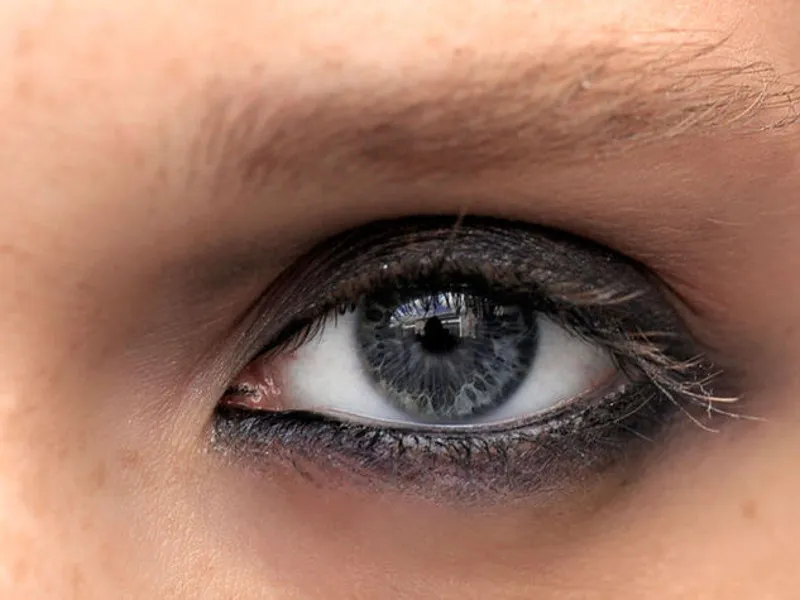
Black eye color is often portrayed in popular culture and literature as a mysterious and attractive feature. However, there is some confusion about whether this color actually exists. Eye color depends on how the iris—the colored part of the eye—reflects light. Technically, true black eye color does not exist; instead, very dark brown eyes may appear black. Understanding how eye color forms and its genetic structure helps clarify this concept.
What Is Black Eye Color?
Although the term “black eyes” is commonly used, it is actually misleading. Eye color is determined by the amount and distribution of melanin in the iris. Melanin is the pigment that gives color to our skin, hair, and eyes. Dark brown eyes may appear black due to their high melanin content, but true black eyes would require a structure that absorbs all light, which is not biologically possible.
Eye colors typically range within shades of brown, blue, green, and in rare cases gray. The pigmentation in the iris determines how the eye appears. Therefore, what is referred to as black eyes are actually very dark brown eyes that look nearly black due to dense melanin.
Genetic Structure of “Black” Eye Color
Eye color is part of our genetic inheritance and results from the interaction of multiple genes. These genes control melanin production and distribution. Dark brown eyes occur due to the dominance of genes associated with high melanin concentration. In particular, the OCA2 and HERC2 genes play a significant role in determining eye color.
Different genetic combinations can lead to a wide variety of eye colors. Dark brown eyes are commonly seen in children of parents with brown eyes, but due to genetic variation, they can also appear in children of parents with different eye colors. This highlights the complexity of genetic inheritance.
People with “Black” Eyes Around the World
Globally, dark brown eyes are considered the most common eye color. They are especially prevalent in regions such as Asia, Africa, and the Middle East. The genetic makeup of people in these regions tends to favor higher melanin production, resulting in darker eye colors.
In contrast, lighter eye colors are more common in Europe. However, due to migration and genetic mixing, various eye colors can now be found worldwide. Eyes described as black may appear differently depending on lighting conditions, which adds to their visual appeal.
Effects of Dark Eye Color on Eye Health
Eye color is believed to have certain effects on eye health. Darker eyes contain more melanin, which can provide better protection against sunlight. Melanin helps absorb ultraviolet (UV) rays, offering a protective advantage.
However, despite these advantages, individuals with darker eye colors may still face certain eye conditions. For example, pigmentary glaucoma can occur when pigment particles block drainage channels in the eye. Therefore, regular eye examinations play an important role in maintaining eye health.