
When Does a Baby’s Eye Color Become Clear?
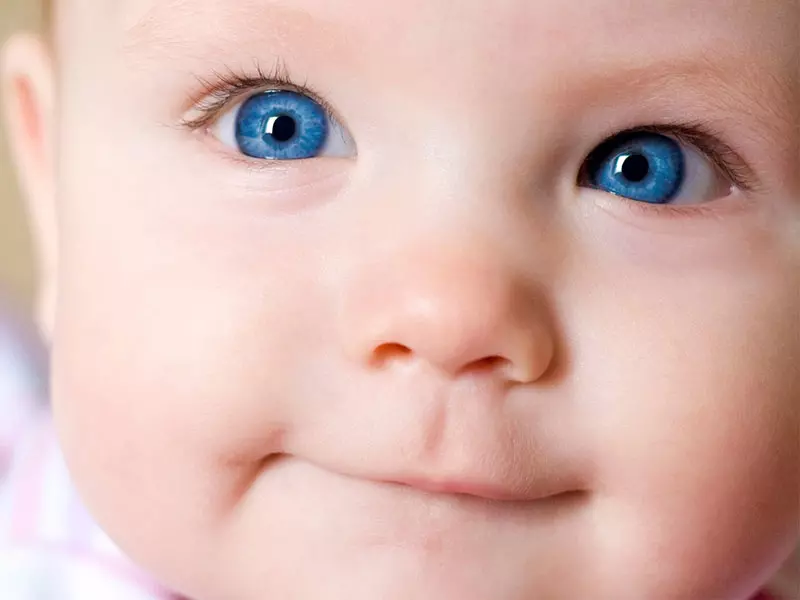
A baby’s eye color is a topic that many parents are curious about. This process begins from the moment the baby is born. During the first months after birth, babies’ eyes are usually blue or gray in tone. The reason for this is that the colored part of the eye, called the iris, has not yet accumulated enough melanin pigment. The clearest answer to the question when does a baby’s eye color become clear is that eye color usually starts to become noticeable between 6 and 12 months.
The change in eye color occurs as the amount of melanin gradually increases over time. Melanin is a natural pigment found in the skin, hair, and eyes. As the baby grows, cells called melanocytes begin to produce more melanin as a result of exposure to light. This process causes the eye color to gradually change. Although eye color may begin to become noticeable within the first three months, this process can take longer for some babies.
Melanin production is largely guided by genetic factors. The eye colors of the mother and father play an important role in determining the baby’s eye color. However, due to genetic variations, a baby’s eye color may differ from what is expected. For example, although it is less likely, two brown-eyed parents can have a blue-eyed child. This situation is the result of genetic diversity and shows that eye color predictions are not always certain.
The Role of Genetic Factors
The genetic basis of eye color is quite complex. A baby’s eye color emerges as a result of genetic inheritance. Scientists have identified several genes that play a role in determining eye color.
The OCA2 gene codes for a protein that directly affects melanin production. The activity of this gene has a significant influence on eye color. The HERC2 gene regulates the expression of the OCA2 gene. Certain variations of HERC2 can increase or decrease the activity of OCA2, which affects melanin levels and contributes to the determination of eye color. These complex genetic interactions allow babies’ eye colors to appear in a wide range of shades.
Family history also plays an important role in eye color. The eye colors of grandparents and other relatives may influence the baby’s eye color. For this reason, predicting a baby’s eye color is often uncertain. Variations in a baby’s genetic structure may lead to the appearance of rare eye colors. This shows that genetic diversity lies behind the variety of eye color shades.
Eye Color Changes in Babies
A baby’s eye color can change significantly during the first year after birth. The question when does a baby’s eye color become clear often occupies the minds of many parents, and the process itself can be fascinating. During the first months, eye color may appear lighter and less defined, but over time it gradually becomes darker and more distinct.
Several factors influence the change in eye color during this period. Melanin accumulation, exposure to light, and genetic factors all play important roles. As the baby grows, the amount of melanin in the eyes increases, which causes the eye color to darken. This change may be especially noticeable in babies who eventually develop brown eyes.
When observing changes in a baby’s eye color, it is important for parents to remain patient. Eye color changes usually accelerate after the sixth month and may continue until around the first year. In some cases, however, eye color changes may continue until the age of two. Therefore, it can be difficult to predict exactly when the final eye color will settle.
Factors That Influence the Determination of a Baby’s Eye Color
A baby’s eye color is determined through the interaction of several different factors. Genetic factors play the most important role in this process. The eye colors of the mother and father are among the main factors that influence the baby’s eye color.
In addition, environmental factors may also influence eye color. For example, the amount and quality of light in a baby’s environment may affect melanin production. Eyes are sensitive to light, so greater exposure to light may cause the eye color to darken. This explains why a baby’s eyes may appear different under various lighting conditions.
Finally, nutrition and overall health may also influence eye color development. A healthy and balanced diet supports overall health and may indirectly benefit eye health as well. Vitamins that support eye health, especially vitamin A, may contribute positively to melanin production.
Frequently Asked Questions About Babies’ Eye Color
1. When does a baby’s eye color become permanent?
A baby’s eye color usually begins to become more noticeable between 6 and 12 months and may become permanent by around the first year. However, in some cases eye color may continue to change until the age of two.
2. Can two blue-eyed parents have a brown-eyed child?
Theoretically this is possible, but the probability is quite low. Due to genetic diversity, however, such cases can occasionally occur.
3. How can a baby’s eye color be predicted?
A baby’s eye color can be estimated by considering the eye colors of the parents and other family members. However, these predictions are not always exact because genetic variations can influence eye color.
In this article, we aimed to answer many common questions about babies’ eye colors. If you are a parent wondering about your baby’s eye color, it is important to remember that this process is a natural part of development and requires patience. For more information, you may consult your doctor or seek genetic counseling services.
 Call
Call
 Whatsapp