


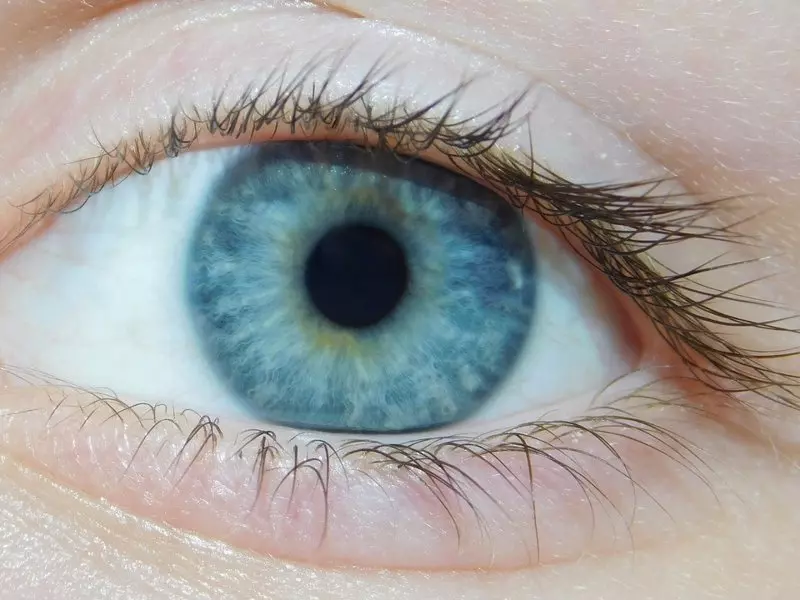
Eye color is a feature that attracts attention and is often seen as an important part of our identity. Blue eyes offer a rare and striking appearance. In this article, we explore what percentage of the world has blue eyes and other interesting facts about this eye color.
The Secret of Blue Eyes: Genetic Factors
The secret of blue eyes lies in our genetic code. Eye color is determined by the amount of melanin in the iris. Blue eyes occur due to low melanin levels, which cause light to scatter within the iris, resulting in blue tones. This is known as Rayleigh scattering, an optical phenomenon.
Genetic factors play a key role in the appearance of blue eyes. This eye color is typically associated with recessive genes, meaning a person must inherit this trait from both parents. Blue eyes are believed to have first appeared in Northern Europe and spread across the world over time.
The rarity of blue eyes is directly related to how often this genetic combination occurs. Studies show that approximately 8–10% of the global population has blue eyes, making them relatively rare and distinctive.
Percentage of Blue-Eyed People in the World
The percentage of people with blue eyes varies depending on geography and cultural factors. In Northern Europe, this rate can reach up to 80%, while in regions like Asia and Africa, it is significantly lower.
Countries such as those in Scandinavia, Estonia, and Finland stand out for their high prevalence of blue-eyed individuals. In contrast, in Türkiye, the percentage is estimated to be below 5%.
This distribution has been shaped by migration, intermarriage, and genetic diversity throughout history. The relatively low global percentage contributes to the uniqueness of blue eyes.
History of Blue Eyes
The history of blue eyes dates back thousands of years. It is believed that the first blue-eyed individuals appeared between 6,000 and 10,000 years ago in Europe due to a genetic mutation that gradually spread across populations.
Throughout history, blue eyes have held different meanings in various cultures. In ancient Greece, they were seen as a symbol of divine beauty, while in medieval Europe, they were associated with purity and loyalty.
In modern times, blue eyes have also played a prominent role in media and popular culture, often representing beauty and attraction.
Psychological and Social Effects of Blue Eyes
Eye color can influence first impressions. Blue eyes are often associated with sincerity, trust, and attractiveness. Some studies suggest that individuals with blue eyes may be perceived as more approachable and warm.
From a social perspective, blue-eyed individuals are sometimes seen as rare or unique. This perception can influence social interactions and how individuals are perceived in different environments.
However, in some cultures, blue eyes may also be perceived as unusual or foreign, highlighting the importance of cultural context.
Cultural Meanings of Blue Eye Color
Blue eyes carry different meanings across cultures. In Western societies, they are often linked to beauty and charm, while in some Asian cultures, they are considered exotic and mysterious due to their rarity.
They are frequently used in literature, music, and art as symbols of deep emotion and love. In some religious contexts, blue eyes may even represent a divine or sacred trait.
Distribution of Blue-Eyed Individuals: Geographic Differences
The global distribution of blue eyes is quite fascinating. Northern Europe, especially Scandinavian countries, has the highest concentration of blue-eyed individuals. Historical genetic isolation in colder climates contributed to this prevalence.
In contrast, regions such as the Mediterranean, the Middle East, and Asia have much lower rates. This reflects differences in genetic pools and diversity over time.
Health Aspects of Blue Eyes
There are some interesting links between eye color and health. Individuals with blue eyes may be more sensitive to UV light due to lower melanin levels, which can increase the risk of certain eye conditions.
Some studies also suggest a possible higher sensitivity to certain types of cancer, as well as conditions like allergies and migraines. However, these are not definitive and vary from person to person.
Overall, general health depends on many factors, and eye color alone is not a determining factor.