
What Color Will My Child’s Eyes Be?
The question “what color will my child’s eyes be?” is one of the most common curiosities among parents. Eye color reflects the complexity of genetic inheritance and is one of the traits that make individuals unique. It is not only an aesthetic feature but also an indicator of hereditary characteristics. In this article, we will explore how eye color is determined, the role of genetics, and how parental eye color combinations influence a child’s eye color. We will also examine how eye color can change over time.
How Is Eye Color Determined?
Eye color depends on the amount of melanin in the iris. The level of melanin determines whether the eyes appear light or dark. For example, high melanin levels produce dark brown or black eyes, while lower levels result in blue or green eyes. Melanin production is controlled by genetic coding inherited from parents.
Multiple genes influence eye color, but the most significant ones are OCA2 and HERC2. These genes regulate melanin production and distribution, contributing to the final eye color. Therefore, a child’s eye color depends on the combination and interaction of genes inherited from both parents.
Scientists have shown that eye color is far more complex than simple Mendelian inheritance. The interaction of multiple genes makes eye color diverse and difficult to predict with certainty. However, it is possible to estimate probabilities.
Genetic Factors and Eye Color
Genetic factors play the most important role in determining eye color. Several key genes in the human genome influence this trait, particularly OCA2 and HERC2, which regulate melanin production.
The OCA2 gene plays a major role in iris pigmentation, while HERC2 controls how OCA2 functions. A specific variation in the HERC2 gene is associated with blue eye color. However, many other genes also contribute to eye color variation.
Because of this complexity, predicting eye color can be challenging. Even if both parents have brown eyes, a child may still have blue or green eyes due to recessive genes. This highlights the diversity and unpredictability of genetic inheritance.
Parental Eye Color Combinations
Parental eye color combinations can provide clues about a child’s possible eye color, although they do not guarantee exact outcomes. Brown eyes are generally dominant, so two brown-eyed parents are more likely to have a child with brown eyes. However, other colors are still possible.
Here is a general overview of possible outcomes:
-
Brown + Brown → Brown, Green, Blue
-
Brown + Blue → Brown, Green
-
Brown + Green → Brown, Green, Blue
-
Blue + Blue → Blue, Green
-
Blue + Green → Blue, Green
-
Green + Green → Green, Blue
These are only probabilities. Family history, such as grandparents’ eye colors, can also influence outcomes.
Eye Color Change Process
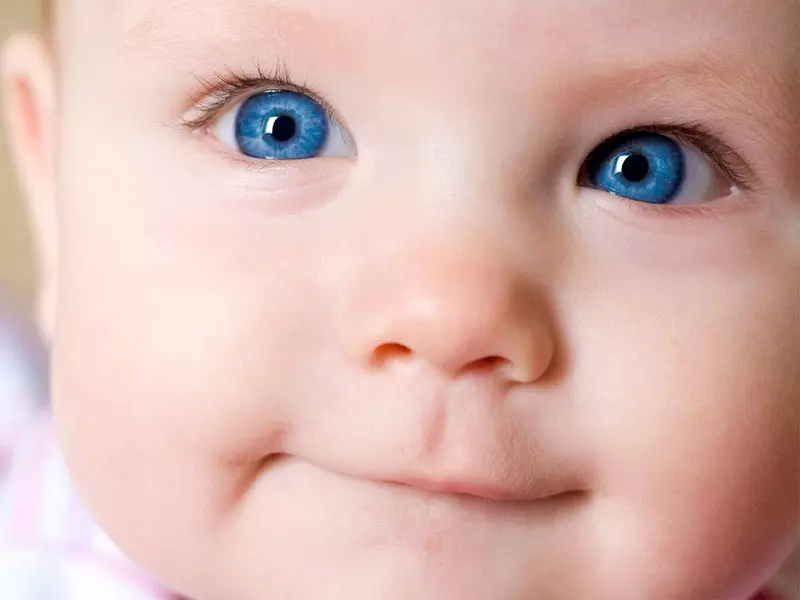
Eye color often changes after birth. Newborns typically have blue or gray eyes because melanin production is not yet fully developed. As melanin increases, eye color begins to change.
The most noticeable changes usually occur within the first six months, although the process can continue up to two years in some cases. Once melanin production stabilizes, the eye color becomes permanent.
Parents can observe this natural transformation as part of their child’s development. Eye color change is a normal and fascinating aspect of early growth.
 Call
Call
 Whatsapp