
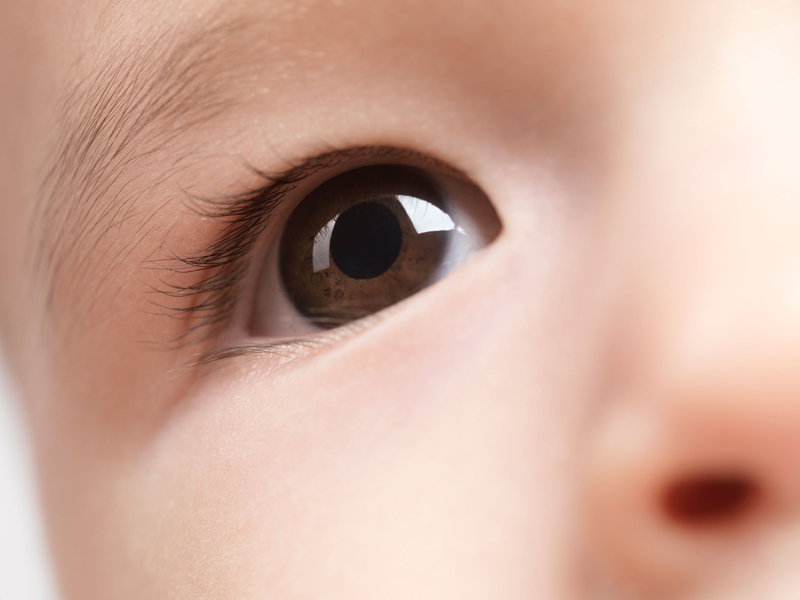
What Color Will My Baby’s Eyes Be?
A baby’s eye color is a topic that sparks curiosity for many parents. Eye color is an important part of our genetic inheritance, and predicting what color your baby’s eyes will be can be quite difficult. The question “What color will my baby’s eyes be?” is an exciting mystery for many parents. In this article, we will explore how eye color is determined, which factors influence it, and whether it is possible to predict your baby’s eye color.
The determination of eye color is a complex process in genetics. Genes play a significant role in this process, and multiple genes interact to produce the final eye color.
Eye color also has social and cultural significance. Different societies may perceive eye colors differently, which increases the interest in this topic. To better understand your baby’s eye color, we will look at the scientific facts behind it.
Eye Color and Genetics
The genetic factors that determine eye color are highly complex. The main genes involved include OCA2 and HERC2. These genes influence whether eye color appears in shades such as blue, green, or brown.
Genetic inheritance plays a crucial role in determining eye color. The combination of genes inherited from both parents shapes the baby’s eye color. However, it is difficult to predict exactly how this combination will manifest. Even if both parents have brown eyes, it does not guarantee that the baby will also have brown eyes. Genetic variation can lead to different outcomes.
Eye color genetics cannot be fully explained by simple Mendelian inheritance. This means that eye color involves more than a straightforward dominant-recessive relationship. It includes multiple genes and their interactions, which explains the wide variety of eye colors.
How Does My Baby’s Eye Color Change?
A baby’s eye color can change during the first few months after birth. Many babies are born with blue eyes, but this color is often not permanent.
Your baby’s eye color usually begins to change between 6 and 12 months, gradually reaching its final shade. However, in some cases, this process may take longer. It can take up to 2–3 years for the eye color to fully settle. During this time, slight changes in eye color may be observed.
Changes in eye color can be influenced not only by genetics but also by environmental factors. Exposure to light may play a role in this process. Therefore, it is important to be patient while observing your baby’s eye color development.
Which Factors Affect My Baby’s Eye Color?
Several factors influence your baby’s eye color. Genetics is the most important one, as the genes inherited from parents determine the outcome.
Melanin levels are another key factor. Melanin is the pigment that affects the color of the iris. As melanin levels increase, eye color becomes darker. Therefore, melanin production plays a critical role in eye color changes.
Other factors, such as overall health and nutrition, may also have an indirect influence on eye color development. However, these effects are less significant compared to genetic factors.
Is It Possible to Predict My Baby’s Eye Color?
Many parents try to predict their baby’s eye color in advance. However, it is quite difficult to do so with certainty due to the complexity of genetic factors.
There are some scientific methods used to estimate eye color. For example, considering the eye colors of parents and other family members can provide a general prediction. However, these predictions are not always accurate and should be taken as rough estimates.
Although predicting your baby’s eye color is challenging, it can be an enjoyable process filled with curiosity. Each baby has a unique genetic makeup, which means every baby may have a unique eye color. Embracing this natural process and observing how your baby’s eye color develops is the best approach.
 Call
Call
 Whatsapp