
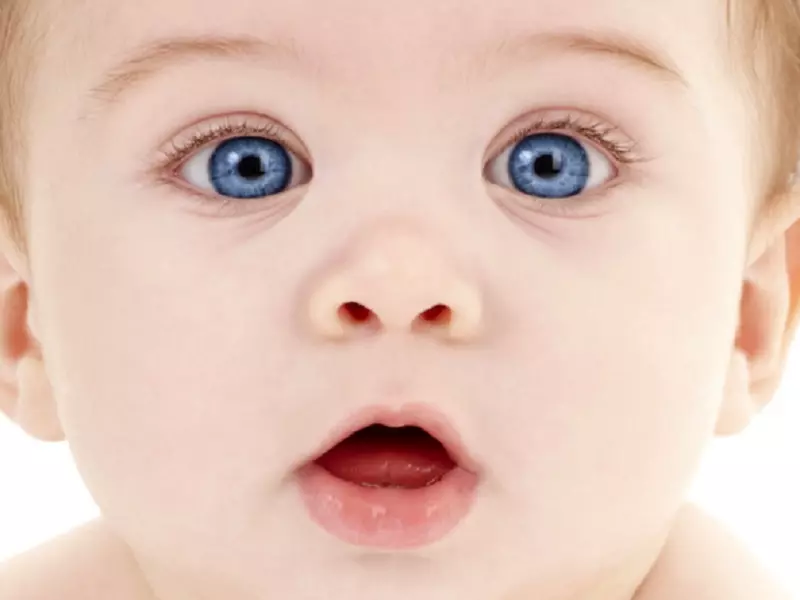
What Color Will a Baby’s Eyes Be?
The formation of a baby’s eye color is an exciting and intriguing topic for many parents. A newborn’s eye color typically begins to develop in the womb and becomes more defined within the first few months after birth. During this process, the melanin pigment in the iris plays a critical role. The amount and distribution of melanin determine whether the eye color will be light or dark.
The pigmentation process in the iris can change rapidly during the first months of a baby’s life. At birth, babies’ eyes are usually blue or gray in tone. However, as melanin production increases, the eye color gradually settles into a more permanent state. This transformation typically continues until the baby is around 6 to 9 months old, and the final eye color is usually established by the age of one.
Genetic factors also play a significant role in the formation of eye color. The genetic material inherited from the parents directly influences the baby’s eye color. The genetic background from both the mother and father shapes melanin production and distribution, making it possible to estimate a baby’s eye color to some extent.
Genetic Factors Affecting Eye Color
Genetics is one of the most important factors in determining a baby’s eye color. Eye color is generally influenced by two main pigments: eumelanin and pheomelanin. Eumelanin produces black or brown pigment, while pheomelanin produces red or yellow pigment. The combination of these pigments determines the tone and depth of eye color.
A baby’s eye color is determined by the genes inherited from the parents. Genes related to eye color are typically classified as dominant and recessive. For example, brown eye color is usually dominant, while blue eye color is recessive. Therefore, a parent with brown eyes is more likely to pass on dominant genes compared to a parent with blue eyes.
The complexity of genetic factors can make predicting eye color difficult. Polygenic inheritance, meaning the involvement of multiple genes, plays a role in determining eye color. This can lead to unexpected outcomes. For instance, two blue-eyed parents may have a child with brown eyes, which is a result of genetic variation.
The Process of Eye Color Change in Babies
The change in a baby’s eye color is a fascinating process for many parents. In the first few months after birth, the most noticeable changes in eye color occur. During this time, melanin production in the iris increases, and the eye color gradually approaches its final form.
Visible changes can occur during the first months. For example, eyes that appear blue or gray at birth may turn green or brown as melanin accumulates. The most significant changes usually occur between 6 and 9 months. However, in some babies, this process may continue until the age of three.
In addition to genetic factors, environmental influences may also affect eye color changes. Factors such as light exposure, nutrition, and lifestyle can influence melanin production in the eyes. Therefore, eye color development can vary from one baby to another and may not follow a fixed pattern.
Predicting a Baby’s Eye Color
Predicting a baby’s eye color can be a fun activity for many parents. However, it is difficult to determine eye color with certainty due to the complexity of genetic factors and melanin production. Still, some clues can help guide these predictions.
Parents’ eye colors play a key role in estimating a baby’s eye color. Dominant genes can be decisive in this process. For example, if both parents have brown eyes, the likelihood of the baby having brown eyes is higher. However, genetic diversity and the presence of recessive genes can lead to unexpected results.
Another way to predict a baby’s eye color is by examining family history. The eye colors of grandparents can also influence the baby’s eye color. Therefore, reviewing the family tree can be helpful in evaluating possible eye color combinations. Ultimately, predicting a baby’s eye color is not an exact science, but genetic clues and family background can make the process more enjoyable.
The Influence of Family Eye Colors on the Baby
Family eye colors have a significant impact on determining a baby’s eye color. The eye colors of parents and other family members can influence the baby’s potential eye color, which is a result of genetic inheritance.
Dominant eye colors within the family play an important role in this determination. For example, since brown eye color is typically dominant, children of parents with brown eyes are more likely to have brown eyes. However, recessive genes and genetic diversity can complicate this and lead to unexpected outcomes.
The eye colors of grandparents are also an important factor. The presence of different eye colors within the family tree can create variation in the baby’s eye color. Therefore, examining family eye colors can be helpful when making predictions. However, due to the complexity of genetics, these predictions are not always definitive.
Frequently Asked Questions About Baby Eye Color
When does a baby’s eye color change?
A baby’s eye color begins to change after birth and typically becomes more defined between 6 and 9 months. In some cases, this process may continue until the age of three.
Can a baby’s eye color be predicted with certainty?
It is difficult to predict eye color with certainty. Genetic factors, family history, and environmental influences can make this process complex.
How does having different eye colors in the family affect the baby?
Different eye colors within the family create genetic diversity and may lead to unexpected eye color outcomes in the baby. Dominant and recessive genes play a key role in this process.
For parents who want to learn more about baby eye color and make predictions, this process can be both fun and educational. By examining genetic factors and family history, you can make this experience even more engaging.
 Call
Call
 Whatsapp