


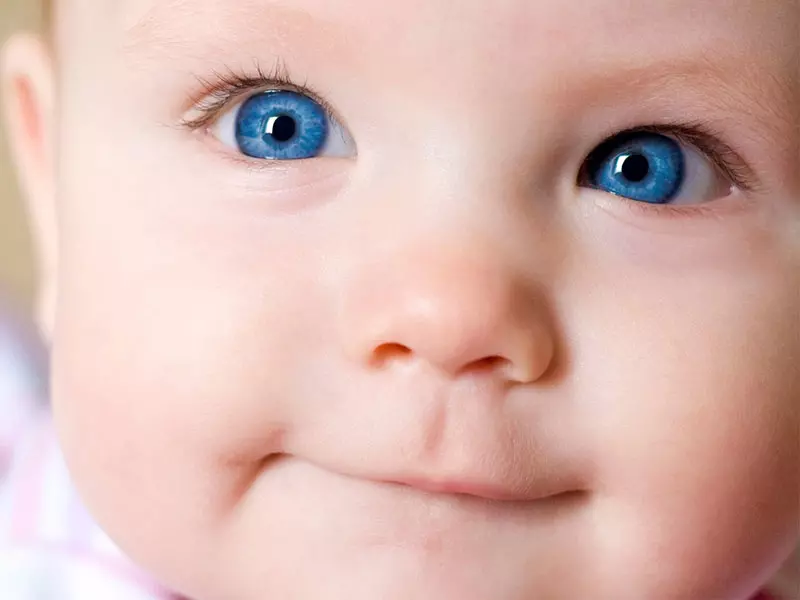
Newborn babies’ eyes are usually light blue or gray. This is because the melanin pigment in their eyes has not yet fully developed. Melanin is the primary pigment responsible for eye color, and it is present at low levels at birth. Therefore, eye color is not yet clearly defined in the first days and weeks of life.
In the first few months after birth, noticeable changes in eye color can be observed. As babies grow and are exposed to light, melanin production increases. This may cause the eye color to shift to darker shades. For example, eyes that appear blue at birth may later turn brown or green.
The speed of eye color change varies for each baby. In some babies, this process is completed within a few months, while in others it may continue until the age of two or three. These changes can be exciting for parents, as they eagerly anticipate their child’s permanent eye color.
How Does Eye Color Change in Newborns?
Eye color in newborns can change significantly during the first few years of life. This is due to the gradual increase in melanin levels, which leads to the development of a more permanent eye color. Melanin affects not only eye color but also skin and hair color.
As melanin levels increase, eye color tends to darken. For instance, eyes that appear blue at birth may later turn green, hazel, or brown. The key factor here is the rate of melanin production. These changes are usually most noticeable within the first six months and may continue until the age of two.
In some babies, this process may take longer. In certain cases, eye color may continue to change until the age of five. This process is closely related to genetic factors, and the eye colors of the parents can influence these changes.
Factors Determining Eye Color in Newborns
Many factors influence the eye color of newborn babies. Genetics is the most important factor. The eye colors of the mother and father significantly affect the child’s eye color. However, this is not entirely predictable, as the genetic background of both parents must be considered.
The amount of melanin is another key factor. Melanin determines the level of pigmentation in the eyes and influences how dark or light the eye color appears. Melanin levels can vary depending on both genetic structure and environmental influences. For example, babies exposed to more sunlight may produce more melanin.
Environmental factors may also have an indirect effect on eye color. The amount and quality of light exposure in the early months of life can influence melanin production. However, these effects are generally more limited compared to genetic factors.
Eye Color Genetics: The Role of Parents
Eye color genetics is quite complex. The eye colors of the mother and father play an important role in determining the child’s eye color. However, eye color is only one part of a broader genetic structure and results from the interaction of multiple genes. For example, if one parent has blue eyes and the other has brown eyes, the child’s eye color will depend on which genes are dominant.
Genetic inheritance is not limited to parents alone. The eye colors of grandparents and previous generations are also part of the genetic pool and may influence the outcome. Therefore, when predicting eye color, it is important to consider family history as well.
With advancements in genetics, predictions about eye color have become more accurate. However, there is still no exact formula, and eye color remains largely a natural variation. Although genetic testing can provide clues, it is necessary to wait until the eye color fully develops for a definitive result.
Eye Color and Health in Newborn Babies
Eye color is not only an aesthetic feature but can also provide information about certain health conditions. For example, genetic conditions such as albinism may cause the eyes to remain light in color. This is due to a disruption in melanin production and is often accompanied by noticeable differences in skin and hair color.
If any abnormalities are observed in a baby’s eyes, it is important to consult a pediatric specialist. Some changes in eye color may indicate underlying eye health issues. For example, sudden changes in eye color or differences between the two eyes may be signs of a health condition.
A baby’s eye health reflects their overall health. Therefore, regular eye examinations are important for the early detection of potential issues. Eye health assessments evaluate not only eye color but also vision and other eye functions.
Eye Color Change: When and How Does It Happen?
Eye color change usually begins within the first six months of life and may continue for two to three years. In some children, this process may last until the age of five. This change is related to the production and distribution of melanin in the body.
Eye color change is generally gradual. In the first few months, slight differences in eye color may be observed. These changes often begin around the edges of the eye and gradually spread. The eye color typically settles by around the age of two.
For parents, observing this process can be exciting. Each change should be seen as part of the baby’s growth and development. During this period, it is important to monitor eye health regularly. Although eye color changes are normal, any unusual signs should be evaluated by a specialist.