
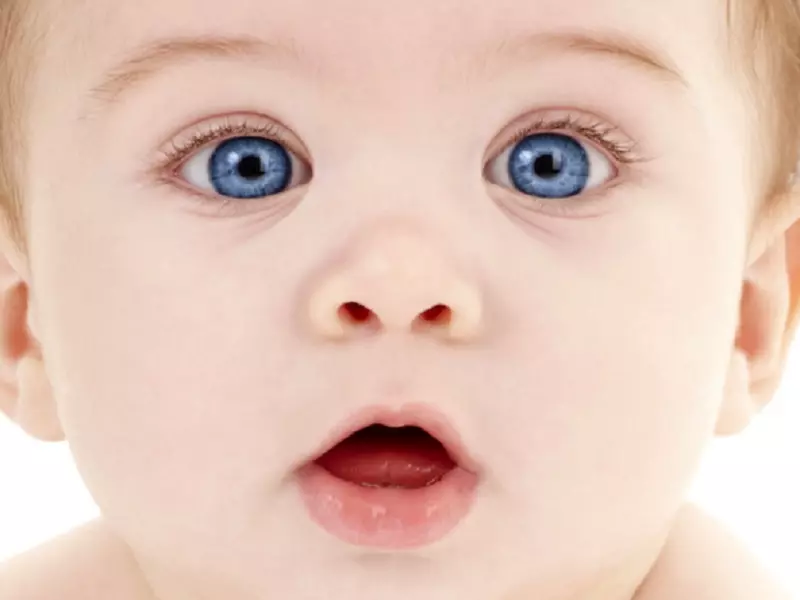
What Color Are Blue Eyes in Newborn Babies?
Every parent wonders what color their newborn baby’s eyes will be. When babies are born with blue eyes, a common question arises: will this color remain permanent or change over time? In this article, we will examine how eye color develops in babies and which factors influence it.
Newborn babies’ eyes are often seen as blue. However, this blue color may change over time. It can take several months, or sometimes even years, for a baby’s eye color to fully settle. Understanding how this process works and which factors are involved can be valuable for parents.
In this article, we will discuss in detail whether blue eye color in newborns is permanent, how genetic and environmental factors shape eye color, and the possible changes that may occur throughout life.
Formation and Change of Blue Eye Color
The formation of eye color in babies is a complex biological process. At birth, many babies have blue eyes because the pigment called melanin has not yet fully developed. Melanin is the main component responsible for eye color and plays a key role in changes over time.
Eye color can change after birth as melanin production increases. During the first few months, and sometimes even the first few years, the eyes may turn into a darker color. For example, a baby’s eyes may initially appear blue but later change to green, hazel, or brown as melanin levels rise.
This process varies from baby to baby. Some babies experience rapid changes, while others go through a slower transition. Therefore, it is difficult to predict with certainty whether blue eyes in newborns will remain permanent.
Genetics of Eye Color in Babies
The genetic basis of eye color is quite complex. Parents’ eye colors generally influence the baby’s eye color, but they are not the sole determining factor. Eye color results from the interaction of multiple genes, which combine in different ways to create various possibilities.
Genetic factors affect not only the eye color at birth but also how it may change over time. For example, two parents with brown eyes can have a blue-eyed baby if both carry the gene for blue eyes.
Genetic diversity allows for a wide range of eye color outcomes. Therefore, it is not always possible to predict a baby’s eye color with certainty based solely on the parents’ eye colors. However, genetic tendencies can provide a general idea of possible changes.
Eye Color Changes in Blue-Eyed Babies Over Time
Babies with blue eyes may experience changes in eye color as they grow. These changes usually occur within the first few years of life but can sometimes take longer. As melanin production increases, blue eyes may darken and shift to another color.
Eye color changes typically stabilize during the transition from childhood to adolescence, although some individuals may still experience slight changes in adulthood. This process is closely related to genetics, environmental factors, and individual biological development.
Observing these changes can be an exciting experience for parents. Understanding that these changes are natural and common helps parents follow the process without concern.
Factors Affecting Eye Color in Newborn Babies
Several factors determine a baby’s eye color. These include genetic predisposition, the amount and distribution of melanin, environmental influences, and even nutrition. Understanding how these factors interact helps explain eye color development.
Melanin production plays the most significant role. As melanin levels increase, eye color tends to become darker. Environmental factors can also influence this process; for example, exposure to sunlight may increase melanin production.
In addition, different genetic combinations contribute to eye color variation. Each individual’s genetic makeup is unique, which leads to distinct eye colors. The combination of genetic and environmental factors provides insight into how a baby’s eye color develops.
Considerations for Blue-Eyed Babies
Blue-eyed babies may require some special attention. Their eyes can be more sensitive, especially to sunlight. Therefore, it is important to take appropriate measures to protect their eyes outdoors.
Simple steps can help maintain eye health. For example, using a hat or baby-safe sunglasses can protect against sunlight. Regular eye check-ups and consulting a specialist if any abnormalities are noticed are also recommended.
In conclusion, being mindful of eye care and taking necessary precautions can help ensure that blue-eyed babies grow up healthy and comfortable.
 Call
Call
 Whatsapp