
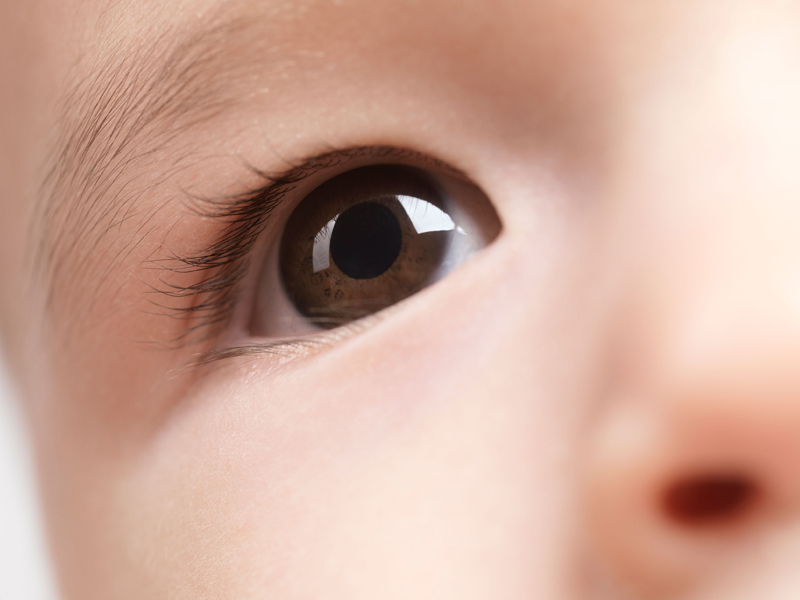
What Color Are a Newborn Baby’s Eyes?
Everyone wonders what babies look like after they are born. One of the most frequently asked questions by parents is what color a newborn baby’s eyes will be. The answer to the question “What color are a newborn baby’s eyes?” depends on both genetic and environmental factors. However, most babies are born with blue or gray eyes. This is because the amount of melanin, the pigment responsible for eye color, has not yet fully developed in the baby’s eyes.
A baby’s eye color can change during the first few months. This process can be quite exciting for parents, as the baby’s eyes may shift to different shades over time. These changes are a natural part of growth and development. Typically, a baby’s eye color becomes permanent between six and twelve months.
If you are curious about how your baby’s eye color will develop, the information in this article may be helpful. Under headings such as how eye color forms in babies and the process of eye color change in infants, you can find detailed insights into this topic. We will also examine the effects of genetic and environmental factors on eye color.
How Does Eye Color Form in Babies?
A baby’s eye color is determined by the presence and concentration of a pigment called melanin in the eye. Melanin is also responsible for skin and hair color. Since melanin production is low in newborns, they are usually born with blue or gray eyes. This can change over time as melanin levels increase.
Two types of melanin play a role in eye color formation: eumelanin and pheomelanin. Eumelanin is responsible for dark brown and black tones, while pheomelanin produces yellow and red tones. The direction in which eye color develops depends on the balance between these two types. For example, high levels of eumelanin lead to brown or black eyes, while lower levels are associated with blue or green eyes.
Melanin production is controlled by genetic factors. Therefore, the eye colors of the parents play a significant role in determining the baby’s eye color. However, due to the complexity of genetics, babies can have different eye colors even if both parents share the same eye color. This is a result of genetic diversity and different gene combinations.
The Effect of Genetic Factors
Genetic factors are one of the most important elements in determining your baby’s eye color. The genes responsible for eye color are inherited from the parents, and their combination determines the final result. Eye color is genetically complex and results from the interaction of multiple genes. Therefore, even if both parents have the same eye color, babies may still have different eye colors.
The influence of genetics can be examined through two main genes: OCA2 and HERC2. These genes regulate melanin production and play a critical role in determining eye color. The OCA2 gene promotes higher melanin production, leading to brown eyes, while the HERC2 gene can suppress this production, resulting in lighter eye colors. The interaction between these genes determines the final eye color.
In addition to these, other genetic variations may also affect eye color. For example, in a family where all parents have blue eyes, it is still possible for a baby to be born with brown eyes due to genetic mutations or rare gene combinations. Such cases are considered a reflection of genetic diversity and one of nature’s surprises.
The Process of Eye Color Change in Babies
A baby’s eye color may begin to change within the first few months after birth. Initially lighter shades may darken or shift to different tones over time. This process typically occurs between six and twelve months and, in some cases, may continue until the age of two. The change in eye color is associated with increased melanin production and greater pigmentation in the eye.
During this period, parents can observe how their baby’s eye color evolves day by day. In the first few months, as melanin production gradually increases, eye color becomes more defined. Babies’ eyes may transition from blue or gray to darker shades such as brown, green, or hazel. However, in some cases, eye color may remain the same as at birth.
The process of eye color change in babies can also be influenced by environmental factors, in addition to genetics. For example, exposure to light may affect melanin production and contribute to changes in eye color. Hormones and nutrition may also play a role. However, these influences are generally less significant than genetic factors and usually do not alter the final outcome of eye color.
Other Factors That Affect Your Baby’s Eye Color
Although your baby’s eye color is largely determined by genetics, environmental and external factors may also influence the final outcome. These include light exposure, nutrition, and overall health. Such factors can affect melanin production and the level of pigmentation in the eye, potentially making the eye color more pronounced.
Light is one of the most important environmental factors affecting melanin production. As the eyes are exposed to light, melanin production may increase, leading to darker eye color. Sunlight, in particular, can stimulate melanin production and contribute to deeper shades. However, these changes are generally less significant than genetic factors and do not fundamentally alter eye color.
Nutrition and overall health may also indirectly influence your baby’s eye color. A healthy diet can support overall pigment production, making eye color appear more defined. Hormonal changes and certain health conditions may also affect melanin production and lead to changes in eye color. While these effects are usually temporary, they can influence your baby’s overall development.
 Call
Call
 Whatsapp