
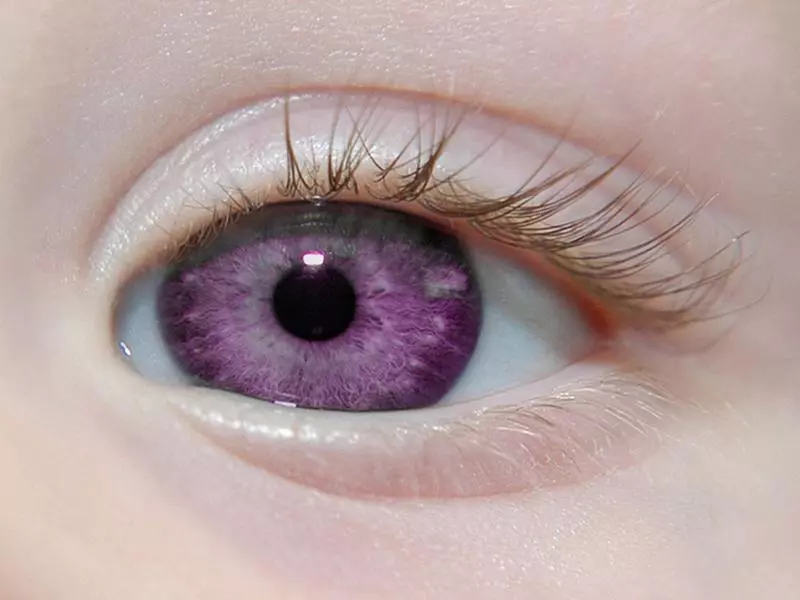
Rarity of Eye Colors
Eye colors show great diversity depending on genetic factors. However, while some eye colors are more common than others, some are quite rare. The rarity of eye colors generally refers to how common or uncommon a particular eye color is within a society or worldwide. These rare eye colors are usually the result of genetic mutations or very specific gene combinations. For some individuals, rare eye colors may be an important part of their identity and a striking feature.
Unlike more common colors such as blue, green, hazel, and brown, rare eye colors generally include gray, amber, and even red. These colors usually occur due to low melanin levels or unique pigmentation in the iris structure. Factors such as iris pigmentation and the way light refracts on the iris also play a role in determining eye color. Rare eye colors may vary between societies and may be more common in certain regions.
People may think that having a rare eye color is special and attractive. This perspective can lead to individuals with rare eye colors being perceived as more noticeable and interesting. Understanding the rarity of eye colors helps us gain deeper insight into the genetic distribution and evolution of eye color.
Rarity and Distribution of Eye Colors
The global distribution of eye colors depends on many factors, including genetic variations and environmental influences. While most people have brown eyes, blue and green eyes are less common. Rare eye colors include gray, amber, and red, and these are seen much less frequently. These rare eye colors may be more prevalent in specific regions or populations.
The most common eye color worldwide is brown. This is due to higher melanin levels, resulting in darker iris pigmentation. Brown eyes account for approximately 55–79% of the world’s population. Blue eyes are more common among people of European descent and make up about 8–10% of the global population. Green eyes are rarer, representing only about 2% of the world population.
Rare eye colors such as gray and amber may result from genetic mutations or highly specific gene combinations. Gray eyes are more frequently observed in certain parts of Europe, while amber eyes are generally more common in Asia and South America. Red eyes are typically associated with genetic conditions such as albinism and are extremely rare.
Rarity of Eye Colors in Ankara
The distribution of eye colors in Ankara reflects the general eye color distribution of Turkey, showing diversity. Brown eyes are the most common across Turkey, but the cosmopolitan structure of large cities like Ankara allows other eye colors to be seen more frequently. Blue and green eyes, in particular, are more noticeable in a city where immigrants and individuals from different ethnic backgrounds live together.
Ankara’s multicultural structure offers interesting diversity regarding eye color rarity. It is possible to encounter individuals with rare eye colors in the city. This may stem from Ankara’s long history of hosting various civilizations, traces of which are still visible today. Therefore, meeting people with rare eye colors in Ankara can be considered a reflection of historical continuity.
Learning more about eye color distribution in Ankara can help us better understand the city’s demographic structure and historical development. Research on eye color rarity may provide insight into the city’s genetic diversity and its historical roots.
Lens Use and Eye Colors
Contact lenses are a popular option for those who want to change or highlight their eye color. Today, lenses are available in various colors and designs, allowing individuals to temporarily alter their eye color. Lens use is particularly common among young people and is an attractive option for those seeking a different appearance.
Lenses may be preferred not only for aesthetic purposes but also to protect eye health. Lenses that help shield the eyes from ultraviolet rays may support eye health. However, certain precautions must be taken during lens use. Proper cleaning of lenses and adherence to hygiene rules are extremely important for maintaining eye health.
Another important factor when using lenses is whether they are suitable for the structure of the eye. Ill-fitting lenses may cause discomfort and negatively affect eye health with prolonged use. Therefore, consulting an eye doctor before starting lens use and obtaining information about appropriate lenses is essential.
Laser Eye Color Change Methods
In recent years, laser eye color change methods have become increasingly popular. These methods aim to permanently change eye color by altering the pigments in the iris. Laser eye color change is a surgical procedure and therefore requires careful evaluation and performance by a qualified specialist.
Laser eye color change is generally carried out using two main techniques. The first aims to destroy existing pigments with a laser to achieve a lighter eye color. The second involves adding colored pigments to the iris structure to create a permanent change in eye color. Both methods carry risks, including infection, vision loss, and the possibility of permanent eye damage.
When considering laser eye color change methods, it is important to carefully evaluate both the risks and potential benefits. Although these procedures promise permanent and noticeable changes, eye health should always remain the top priority. Therefore, consulting a specialist and obtaining detailed information before deciding on such a procedure is essential.
Rare Eye Colors and Their Characteristics
Rare eye colors typically arise from genetic variations and unique pigmentations. These include shades such as gray, amber, and red. Gray eyes contain less pigment due to the way light refracts on the iris, making them rarer. Gray eyes often resemble the beauty of a cloudy or stormy sky.
Amber eyes stand out with golden-yellow or copper tones and often have a wolf-like brightness. While this eye color is common in animals, it is rare in humans. Amber eyes usually result from a mixture of green and brown pigments and represent an interesting genetic variation.
Red eyes are typically associated with genetic conditions such as albinism. In these cases, due to a lack of melanin, iris pigmentation is minimal or absent, allowing light to reflect from the back of the eye and create a reddish appearance. Although rare, red eyes are considered a striking and unique feature.
Gaining more knowledge about the rarity of eye colors and their characteristics can be an important step in understanding the genetic and biological foundations of eye color. This information not only satisfies personal curiosity but may also contribute to genetic research and medical studies.
 Call
Call
 Whatsapp