
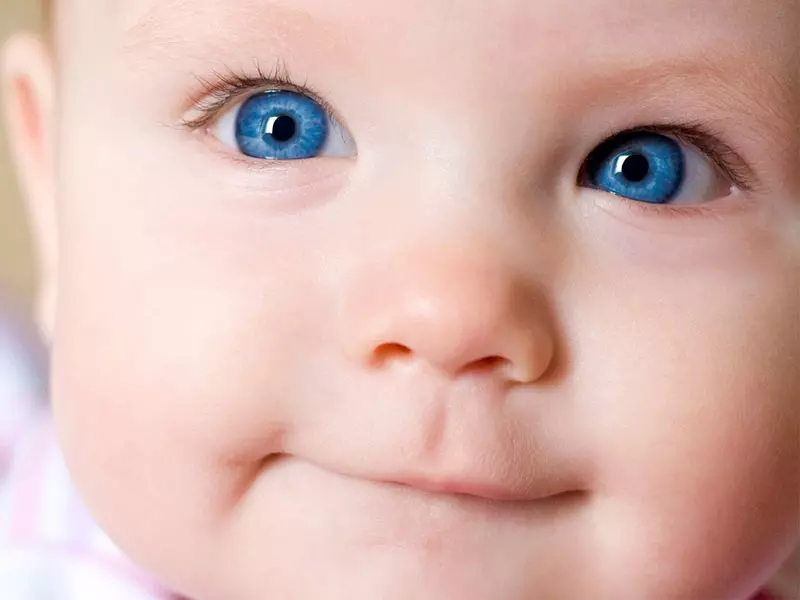
Percentage Distribution of Babies’ Eye Colors
The percentage distribution of babies’ eye colors varies depending on genetic and environmental factors. Most newborn babies are born with blue eyes, but this color may change over time. Understanding the reasons behind this change can be interesting for parents. According to research, the percentage of blue-eyed babies worldwide ranges between 20% and 30%, while the percentage of babies with brown eyes is over 50%.
The amount of melanin plays a critical role in determining eye color. Melanin determines the level of pigmentation in the eyes, and this may change during a baby’s first years of life. For example, babies with low melanin levels are usually born with blue eyes, but as melanin levels increase, the eye color may turn brown or green. This process illustrates how eye color is genetically coded and how environmental factors may influence this coding.
Genetic factors are the most important element in determining eye color. However, epigenetic factors may also play a role in changes in eye color. More genetic research is needed to fully understand how these factors affect babies. Understanding that eye color is a natural biological process can help parents approach changes in their baby’s eye color more consciously.
Which Factors Affect the Percentage of Babies’ Eye Colors?
Babies’ eye colors are influenced not only by genetic inheritance but also by various environmental factors. For example, the geographical region where babies are born may affect the distribution of eye colors. In Northern Europe, blue and green eyes are more common, which reflects the characteristics of the regional gene pool.
Genetics is the primary factor determining eye color. The eye colors of parents play a major role in determining the eye color of their children. For instance, the likelihood of two blue-eyed parents having a brown-eyed child is very low. However, rare situations may still occur due to genetic combinations and mutations.
Environmental factors may influence melanin production. For example, exposure to sunlight may increase melanin production and lead to changes in eye color. As a result, babies’ eye colors may change during the first few years of life. It is clear that more research is needed to understand the impact of environmental factors on eye color development in babies.
The Most Common Eye Colors in Babies
The most common eye colors in babies are brown, blue, and green. Brown eyes are the most common worldwide because the gene responsible for brown eyes is dominant. A large number of newborn babies are born with blue eyes, although this color may change over time.
Brown eyes appear darker because they contain higher levels of melanin. Melanin absorbs light, which causes the eye color to appear darker. Blue eyes contain lower levels of melanin and reflect more light, creating a lighter blue tone. Green eyes occur when melanin levels are moderate and are generally less common genetically.
Green eyes are genetically rarer and appear as a result of specific genetic combinations. This eye color is often considered a blend of blue and brown eyes. Babies’ eye colors are shaped by genetic diversity and environmental influences, which ultimately affect the global distribution of eye colors.
The Genetic Relationship of Babies’ Eye Colors
Eye color is a genetic trait, which means it is closely related to the genetic material inherited from parents. According to Mendelian genetics, eye color is determined by the combination of dominant and recessive genes. Brown eye color is controlled by a dominant gene, while blue and green eye colors are associated with recessive genes.
Genetics plays a complex role in coding eye color. Although it is unlikely for two brown-eyed parents to have a blue-eyed child, it is not impossible. Genetic variations and mutations may lead to unexpected results in eye color.
Family history and genetic inheritance are important factors in determining a baby’s eye color. Genetic counseling may help parents predict the possible eye colors of their baby. Genetic combinations and variations create a complex structure in eye color determination, which is why research on this topic continues to be important.
How Babies’ Eye Colors Change Over Time
Babies’ eye colors can change over time, and this change is usually observed during the first year after birth. Most babies are born with blue eyes due to low levels of melanin. As melanin production increases, the eye color may change.
The first six months are one of the most significant periods during which eye color changes can occur. During this time, melanin production accelerates and noticeable changes in eye color may appear. For example, blue eyes may darken and shift toward brown or green tones. This process demonstrates how genetic and environmental factors work together.
Observing changes in a baby’s eye color can be an exciting experience for parents. Eye color change is a natural part of a baby’s growth and development. By understanding this process, parents can follow their baby’s development more closely and patiently wait to see the final eye color.
Characteristics Observed According to Babies’ Eye Colors
Eye color may provide certain clues about babies’ general characteristics or sensitivities. For example, some research suggests that blue-eyed individuals may be more sensitive to light. This may mean that babies with different eye colors can show different responses to environmental light.
Babies with brown eyes are generally less sensitive to light, which may allow them to feel more comfortable in brighter environments. Some studies also suggest that there may be a relationship between eye color and personality traits. For instance, research has indicated that individuals with green eyes may be more creative and determined.
Although the relationship between eye color and personality is not fully understood, studies on this topic have produced interesting findings. By observing their babies’ eye colors, parents may gain insights into their development. The effects of eye color on development remain an important area for future research.
 Call
Call
 Whatsapp