
How Can You Tell If a Baby Will Have Colored Eyes?
How a baby’s eye color forms and how it changes over time is a topic many parents are curious about. In particular, the question how can you tell if a baby will have colored eyes is frequently asked. In this article, we will explore this topic in detail, examining how both genetic factors and environmental influences shape eye color.
What Is Eye Color and How Does It Form?
Eye color is determined by the amount of pigment in the iris layer of the eye. The iris is the colored part surrounding the pupil, and the amount of melanin present determines whether the eye color is light or dark. As melanin increases, the eye color becomes darker. Brown eyes contain the most melanin, while blue eyes contain the least.
Eye color develops under the influence of genetic factors. This is a process based on genetic information inherited from parents. In most cases, a child’s eye color is related to the eye color history within the family. However, genetic inheritance can be complex, and it is often difficult to predict exactly which gene combinations will result in a specific eye color.
Scientific research shows that eye color is shaped not only by genetic factors but also by certain environmental influences and biological changes. Therefore, it is not always possible to predict a child’s eye color with certainty.
Genetic Factors and Eye Color
Genetic factors play a major role in determining eye color. Children inherit a combination of genes from both parents, and these genes significantly influence eye color. Eye color genes are generally categorized into two groups: dominant and recessive genes.
Dominant Genes: Brown eye color is usually a dominant trait. This means that individuals carrying the brown eye gene are more likely to have children with brown eyes.
Recessive Genes: Blue and green eye colors are typically determined by recessive genes. For these traits to appear, the child must inherit the gene from both parents.
The influence of genetic factors on eye color can be explained through Mendelian inheritance. However, eye color inheritance is not determined by a single gene pair; it results from the interaction of multiple genes. This complexity makes precise predictions difficult.
Changes in Eye Color in Babies
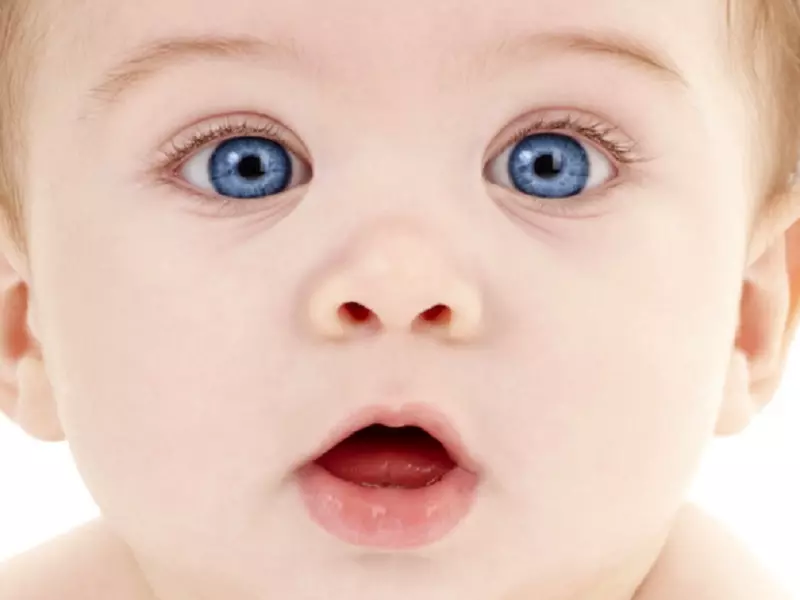
Babies are often born with blue or gray eyes. However, this eye color may change over time. A baby’s eye color usually begins to change within the first six months and, in some cases, this process can continue up to three years.
This change is related to the increase in melanin production in the iris. As melanin levels rise, eye color may become darker. Therefore, a baby who appears to have blue eyes at birth may later develop green or brown eyes.
This process depends not only on genetic factors but also on environmental influences and biological changes. Parents should keep in mind that their baby’s eye color may change over time. Since this process varies for each baby, it is not possible to say exactly when the color will stabilize or what the final color will be.
Other Factors Affecting Baby Eye Color
In addition to genetics, environmental and biological factors can also influence a baby’s eye color. Factors such as hormone levels and nutrition may indirectly affect eye color.
Hormone Levels: Hormonal changes in babies can affect melanin production. Fluctuations in hormones may increase or decrease iris pigmentation, leading to changes in eye color.
Nutrition and Health Status: A healthy diet and overall well-being can indirectly support eye color development by promoting general body health.
Environmental Factors: Light, temperature, and other external factors can influence melanin production. For example, exposure to sunlight may increase melanin production, leading to darker eye color.
All these factors work together with genetics to determine a baby’s final eye color. Therefore, parents should be prepared for variability and consider this process a natural part of development.
Methods to Predict Eye Color in Babies
There are several scientific and fun methods to estimate a baby’s eye color. While they do not provide exact results, they can offer insight into probabilities.
Genetic Prediction Patterns: Calculations based on parents’ eye colors can help estimate the baby’s possible eye color. For example, if both parents have blue eyes, the likelihood of the baby having blue eyes is higher.
Online Eye Color Prediction Tools: There are many online tools that use parental eye color and family history to predict possible outcomes.
Scientific Methods: Genetic counseling can be used for more accurate predictions. These services use genetic testing to help determine potential eye color.
It should be remembered that these methods do not provide definitive answers but can help form an idea about possible outcomes. Since eye color is determined by a complex interaction of genetic and environmental factors, each baby’s development follows a unique path.
Characteristics of Babies with Colored Eyes
Babies with colored eyes often attract attention. Their eyes may display various shades and appear especially striking under different lighting conditions. Colored eyes usually contain less melanin, making them more sensitive to light and giving them a unique appearance.
Babies with colored eyes often become a focal point within their family or social environment. This may require parents to take extra care of their child’s eye health. In particular, protection from harmful UV rays is important for babies with lighter eye colors.
Finally, it should be noted that a baby’s eye color may change over time depending on environmental conditions and lighting. Therefore, parents are advised not to neglect regular eye check-ups to maintain their baby’s eye health.
 Call
Call
 Whatsapp