
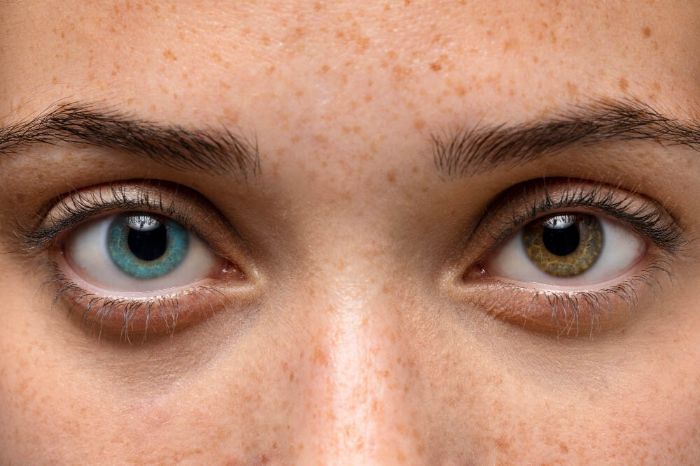
Heterochromia: Different Eye Colors
Heterochromia refers to the condition in which the eyes are different colors. This color variation usually occurs in the iris and is considered relatively rare. Observed in humans and animals—especially cats—it is often perceived as an aesthetic and striking feature.
Heterochromia may be present at birth or develop later in life. Congenital heterochromia is determined by genetic factors, while acquired heterochromia can occur as a result of certain health conditions or trauma. In most cases, heterochromia does not affect vision and is generally harmless.
From a medical perspective, however, it may provide information beyond visual appearance. In some cases, heterochromia can signal an underlying health issue. For this reason, individuals experiencing sudden changes in eye color are advised to consult a specialist.
Types of Heterochromia
Heterochromia is classified into three main types: complete, sectoral (partial), and central heterochromia.
Complete Heterochromia: One eye is entirely one color, while the other eye is completely different. For example, one eye may be blue and the other brown. This type is usually congenital and visually striking.
Sectoral Heterochromia: One or both eyes contain multiple colors within the same iris. A portion of the iris may be a different color. This type is often subtle and may go unnoticed without close observation.
Central Heterochromia: A distinct ring of a different color appears around the pupil. The inner part of the iris differs noticeably from the outer portion, often appearing darker.
Regardless of the type, heterochromia typically does not negatively impact vision.
Causes of Heterochromia
Heterochromia can have multiple causes, most commonly genetic factors. However, environmental influences and certain medical conditions may also contribute.
Genetic Factors: Genetic mutations are the most common cause of heterochromia. Congenital heterochromia is often inherited, and individuals with a family history of heterochromia are more likely to exhibit the condition.
Health Conditions: Eye trauma, congenital disorders, or infections may also lead to heterochromia. Certain eye conditions, such as Fuchs heterochromic iridocyclitis, can cause changes in iris color.
Environmental Factors: In some cases, exposure to chemicals or specific medications may cause changes in eye color. These changes are often temporary and may reverse once the underlying cause is resolved.
Although heterochromia is generally harmless, sudden and unexplained color changes should be evaluated by an eye specialist.
Heterochromia and Genetics
Genetics is one of the primary determinants of heterochromia. The condition is often inherited in an autosomal dominant pattern, meaning it may appear even if only one parent carries the gene.
Research shows that heterochromia is linked to genes involved in eye color determination, particularly OCA2 and HERC2. Mutations or variations in these genes can influence melanin distribution and lead to color differences between the eyes.
While genetics plays a major role, environmental and health factors may also contribute. Genetic testing and counseling can help individuals better understand the origins of heterochromia.
Celebrities with Heterochromia
Several well-known public figures have heterochromia, making the condition more visible and widely recognized.
David Bowie: The British musician was known for his distinctive eyes, which appeared different in color due to an injury that caused anisocoria (unequal pupil size), rather than true heterochromia.
Kate Bosworth: The American actress has sectoral heterochromia, with one eye predominantly blue and a portion of the other containing brown.
Mila Kunis: The actress has one green eye and one brown eye, giving her a unique appearance.
These celebrities have embraced their distinctive eye features, turning them into part of their public identity.
Is There Treatment for Heterochromia?
Heterochromia typically does not require treatment, as it is generally harmless. However, if it results from an underlying medical condition, that condition should be addressed first.
Treatment options depend on the cause. For example, infection-related heterochromia may improve with appropriate medication.
For individuals concerned about cosmetic appearance, colored contact lenses may provide a temporary solution to create a more uniform look. However, lens use should always be guided by an eye specialist to ensure eye health and proper fit.
Heterochromia and Eye Health
Maintaining eye health is important for individuals with heterochromia. Although the condition is usually benign, regular eye examinations are recommended.
Sudden or unexpected color changes may indicate an underlying issue and should be evaluated promptly. Routine eye check-ups help monitor eye health and detect potential problems early.
For individuals with heterochromia, periodic visits to an eye doctor are essential to ensure both eye health and proper assessment of any changes.
 Call
Call
 Whatsapp