


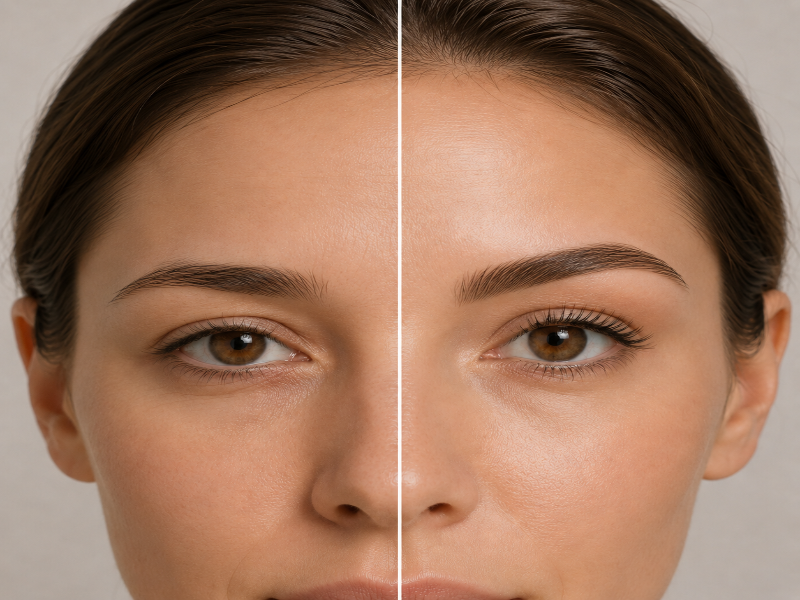
Non-surgical brow lift refers to non-surgical aesthetic procedures that aim to make the eyebrows appear more lifted, balanced, and dynamic. These methods are generally evaluated for brow drooping, tired-looking eyes, and mild laxity in the upper face area. Brow lift and eyebrow lift procedures can be planned with surgical or non-surgical techniques. Which method is suitable should be determined through specialist evaluation according to the person’s facial structure, brow position, skin elasticity, age, and expectations.
What Is Non-Surgical Brow Lift?
Non-surgical brow lift covers aesthetic procedures performed without surgical incisions to help the eyebrows appear higher and more balanced. These applications are especially researched by people who have mild brow drooping, a tired appearance around the eyes, or who want a more lively appearance in the upper face area.
The effect of the eyebrows on facial expression is quite significant. A low brow position may make a person look more tired, sad, or older than they are. Moving the eyebrows to a more balanced position may help the eyes appear more open and rested. For this reason, non-surgical brow lift procedures are among the options evaluated for people who aim for a more dynamic appearance in the upper face area.
However, the effects of non-surgical methods are different from surgical procedures. These procedures generally offer milder and temporary effects. Therefore, it is important to have realistic expectations before the procedure and to create a plan suitable for the person’s facial structure.
Who May Be Suitable for Non-Surgical Brow Lift?
Non-surgical brow lift may be evaluated for people with mild or moderate brow drooping. Especially people who do not want surgery, are looking for a shorter recovery process, or aim for a small but noticeable change in facial expression may research these methods.
These procedures may be more suitable for people who do not have significant sagging in the brow position but want a more open and lively appearance around the eyes. In individuals with good skin elasticity, no advanced brow drooping, and realistic expectations, non-surgical methods may offer more balanced results.
However, if brow drooping is advanced, if there is significant excess skin in the forehead area, or if upper eyelid sagging affects the visual field, non-surgical methods alone may not be sufficient. Therefore, the person should undergo specialist evaluation before the procedure, and surgical and non-surgical options should be considered together.
The Relationship Between Brow Lift and Non-Surgical Eyebrow Lift
Brow lift refers to a general aesthetic approach that aims to place the eyebrows in a higher and more balanced position. This procedure can be performed with surgical techniques, and it can also be supported with non-surgical methods in suitable individuals. Therefore, the concept of brow lift is not limited only to surgery; it may also include different applications aimed at improving brow position.
In non-surgical methods, the aim is to create a milder effect on muscle balance, skin tightness, and facial expression around the eyebrows. Surgical brow lift may be evaluated in cases of more significant brow drooping and structural sagging in the upper face area. Which method should be preferred should be determined according to the person’s anatomical structure and expectations.
At this point, people researching brow lift should clearly understand the differences between surgical and non-surgical options. Because the duration of effect, recovery process, application area, and achievable results of both approaches are different.
The Importance of Facial Anatomy in Eyebrow Lift
When planning an eyebrow lift procedure, facial anatomy should be evaluated in detail. The natural position of the eyebrows, forehead structure, eye area, temple region, skin elasticity, and facial symmetry play a determining role in the procedure plan. Instead of a standard application approach, creating a plan suitable for the person’s facial structure is important for more natural results.
In some people, the outer part of the eyebrows may be lower, while in others, the entire brow line may be positioned downward. The methods to be applied in these two situations may differ. If there is mild drooping in the outer brow area, more limited applications may be sufficient, while more comprehensive planning may be required in general brow drooping.
The eyelid structure should also be evaluated. Sometimes a person may think their eyebrows are low, although the main issue may actually be upper eyelid sagging. Therefore, in eyebrow lift planning, it is necessary to look not only at the eyebrows but also at the eye area as a whole.
What Are Non-Surgical Brow Lift Methods?
Non-surgical brow lift methods can be planned with different techniques according to the person’s needs. These methods are generally procedures that do not involve surgical incisions, have a shorter application time, and may offer a more comfortable return to daily life. However, the effect and permanence of each method may vary from person to person.
Botulinum toxin applications may help the eyebrows appear more lifted by regulating the muscle balance around the brow area. This method may be evaluated especially when a mild lift in the outer part of the eyebrows is targeted. However, it should be known that the effect is temporary and may need to be repeated at certain intervals.
Filler applications may be used to evaluate volume loss around the eyebrows and temple area. Volume support may contribute to a more balanced appearance around the eyebrows in some individuals. Apart from this, energy-based skin tightening applications, thread lift methods, or combined medical aesthetic approaches may also be evaluated in suitable patients.
Why Is Natural Appearance Important in Eyebrow Lift?
One of the most important goals in eyebrow lift procedures is to preserve the natural facial expression. Lifting the eyebrows more than necessary may create a surprised, tense, or artificial appearance in facial expression. Therefore, when planning the procedure, the natural arch of the eyebrows and their harmony with the face should be taken into account.
For a natural result, an approach suitable for the person’s age, face shape, eye structure, and eyebrow anatomy should be adopted. The ideal brow position is not the same for every person. While a milder lift may be sufficient in some faces, the brow line may need to be supported more noticeably in others.
For this reason, people considering eyebrow lift should focus not only on lifting the eyebrows but also on how the overall facial expression will change. Successful planning should target a harmonious and balanced appearance across the entire face.
Is Non-Surgical Brow Lift Permanent?
Non-surgical brow lift methods are generally not permanent procedures. The duration of effect may vary depending on the method applied, the person’s skin structure, age, muscle activity, and lifestyle habits. Therefore, expectations about permanence should be evaluated realistically before the procedure.
The effect of applications that regulate muscle movements, such as botulinum toxin, continues for a certain period and decreases over time. In methods such as filler or thread lift, the duration of effect may vary depending on the material used, application technique, and the person’s tissue characteristics. In energy-based applications, skin tightening may appear gradually.
For people who want a permanent and more noticeable change, surgical brow lift options may also be evaluated. However, whether surgical or non-surgical methods are suitable should definitely be determined through specialist examination.
How Is Evaluation Performed Before Non-Surgical Brow Lift?
Pre-procedure evaluation is one of the most important stages of the non-surgical brow lift process. In this evaluation, the person’s brow position, forehead structure, eye area, skin quality, mimic muscles, and expectations are considered together. In this way, which method may be more suitable can be determined.
During specialist evaluation, previous aesthetic procedures, medications used, allergy history, and general health condition may also be questioned. This information is important for procedure safety and correct planning. As with every aesthetic procedure, a personalized approach is required in non-surgical brow lift applications.
Expectation analysis should also be performed. The brow position the person wants, what kind of change they expect in facial expression, and how noticeable a result they expect from the procedure should be clarified. Realistic expectations are one of the main factors for satisfaction after the procedure.
What Is the Process Like After Non-Surgical Brow Lift?
The process after non-surgical brow lift may vary depending on the method applied. In general, a shorter and more comfortable recovery period is expected compared to surgical procedures. However, as with every procedure, there are some points to consider after the application.
Mild redness, sensitivity, swelling, or bruising may be seen after the procedure. These effects are usually temporary. It may be necessary to follow the care instructions recommended by the specialist, protect the procedure area, and avoid excessive facial expressions or intense physical activities in the early period.
Follow-up appointments are important for evaluating the effect of the procedure. In non-surgical methods, results may become more noticeable sometimes immediately and sometimes within a few days or weeks. Therefore, the period specified by the specialist should be awaited for the final evaluation.
How to Decide Between Non-Surgical and Surgical Brow Lift?
When deciding between non-surgical and surgical brow lift, the level of brow drooping, skin elasticity, signs of aging, and expectations should be taken into account. While non-surgical methods may be sufficient for people with mild brow drooping, surgical methods may be more suitable in advanced sagging.
Non-surgical methods may generally be preferred due to shorter application time and less need for recovery. However, their effects may be limited and temporary. Surgical brow lift may be evaluated for people who aim for a more noticeable and longer-term change.
This decision should not be made by the person alone. Through specialist examination, facial anatomy, brow position, and expectations should be evaluated, and the most suitable method should be determined. In this way, safer and more aesthetically balanced planning can be made.
Common Misconceptions About Non-Surgical Brow Lift
One of the most common misconceptions about non-surgical brow lift is that these procedures will give the same result for everyone. However, each person’s eyebrow structure, skin quality, and mimic muscles are different. Therefore, results may vary from person to person.
Another misconception is that non-surgical methods can provide the same effect as surgical procedures. Non-surgical procedures may offer milder and temporary effects. In people with advanced brow drooping or significant excess skin, surgical options may need to be evaluated.
In addition, the term “non-surgical” does not mean that the procedure is completely risk-free. As with every medical aesthetic application, these procedures should be performed under appropriate conditions and with specialist evaluation.
Conclusion: Non-Surgical Brow Lift Should Be Planned Consciously
Non-surgical brow lift covers non-surgical aesthetic applications evaluated for people who want to support brow position and target a more dynamic appearance in facial expression. These methods may come to the agenda especially in people with mild brow drooping and tired-looking eyes.
However, the same method should not be expected to be suitable for everyone. Brow structure, facial anatomy, eye area condition, skin elasticity, and expectations should be evaluated together. Brow lift and eyebrow lift applications require natural appearance, realistic expectations, and specialist planning as the basic elements of the process.
Before deciding on non-surgical brow lift, a comprehensive evaluation helps the person understand both their aesthetic goals and the procedure process more consciously.
Frequently Asked Questions
Who is suitable for non-surgical brow lift?
Non-surgical brow lift may be evaluated for people with mild or moderate brow drooping, who do not want surgery, and who aim for a more dynamic facial expression. However, suitability should definitely be determined through specialist examination.
Can brow lift be performed non-surgically?
Brow lift can be planned with surgical or non-surgical methods. Non-surgical methods offer a milder effect, while surgical brow lift may be evaluated in people with more significant brow drooping.
Is non-surgical brow lift permanent?
Non-surgical brow lift methods are generally not permanent. The duration of effect may vary depending on the method used, the person’s skin structure, and muscle activity.
Is a natural appearance possible after eyebrow lift?
With proper planning, a natural and balanced appearance can be targeted after eyebrow lift. Positioning the eyebrows in harmony with the facial structure is important in this regard.
Is examination required before non-surgical brow lift?
Yes. Before the procedure, brow position, facial anatomy, eye area, skin structure, and expectations should be evaluated. This examination is necessary to determine which method may be more suitable.