


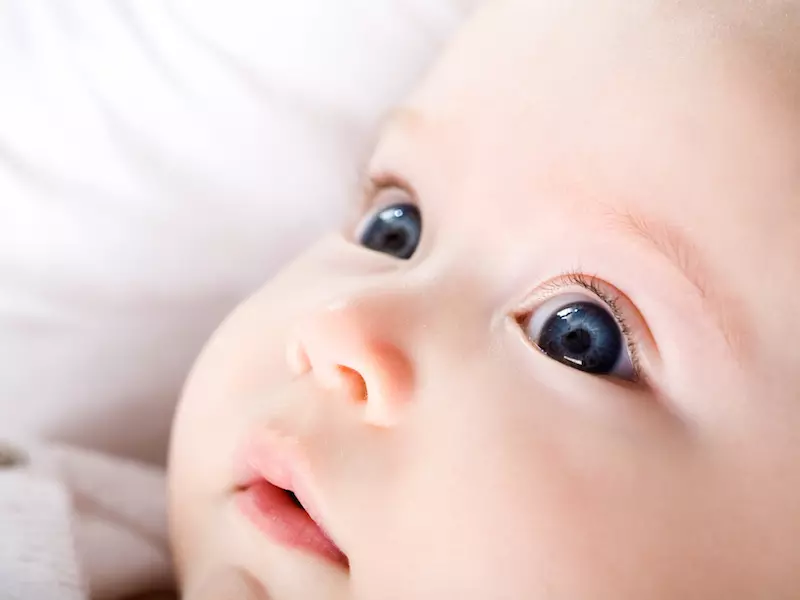
The eye colors of newborn babies are a topic that many parents follow with great curiosity. Every baby born into the world may have different eye colors along with their unique genetic structure. However, this eye color may generally change during the first months. Babies’ eye colors may not become clear immediately after birth and may complete their development over time.
What Are the Eye Colors of Newborn Babies?
Babies are usually born with blue or gray-toned eyes. This is due to the fact that the melanin pigment in their eyes has not yet fully developed. Melanin is the main pigment that determines eye color, and its production increases with exposure to sunlight. Therefore, babies’ eye color begins to change in the first months after birth.
In most cases, it may take approximately six months to one year for a baby’s eye color to become permanent. However, this process may take longer in some babies. The final eye color may vary depending on genetic factors. Therefore, it is important for parents to be patient and allow the process to follow its natural course.
The change in babies’ eye color is generally related to the increase in melanin in the eye. As the amount of melanin increases, the eye color may turn into a darker tone. For this reason, eyes that are initially blue may turn into different shades such as brown, green, or hazel in the following months.
Factors Affecting the Eye Colors of Newborn Babies
The most important factor affecting babies’ eye color is genetics. The genetic characteristics of the mother and father play a major role in determining the baby’s eye color. For example, if both parents have dark-colored eyes, the baby is more likely to have dark-colored eyes as well. However, since genetic inheritance has a complex structure, it is not always possible to make a precise prediction.
Another important factor affecting eye color is ethnic origin. The genetic structures of individuals from different ethnic backgrounds can be decisive in eye color. For example, dark-colored eyes are more common in individuals of Asian origin, while lighter tones are frequently seen in individuals of European origin. This diversity creates a wide range in the distribution of eye colors worldwide.
Finally, environmental factors may also affect changes in eye color. In particular, the amount of sunlight exposure can influence melanin production in the eye, leading to color changes. Therefore, care should be taken to protect babies’ eye health, and actions should be taken in line with medical advice when necessary.
Eye Color Change in Newborn Babies
Changes in babies’ eye color usually begin to become noticeable within the first six months after birth. This process is related to the accumulation of melanin pigment in the eyes. As the amount of melanin increases, the eyes may become darker. However, the speed and degree of this change may vary from one baby to another.
During the eye color change process, parents may notice different shades in their baby’s eyes. For example, eyes that are initially blue may gradually turn into green or brown tones. This change is related to the increase in melanin in the eye and may vary depending on genetic factors. Therefore, observing the change in eye color can be an enjoyable process.
During this period, an important point parents should pay attention to is eye health. If any abnormality is noticed in the eyes, it is recommended to consult an eye doctor. Early intervention plays an important role in preventing possible eye problems.
The Relationship Between Babies’ Eye Colors and Genetics
Genetics is one of the most important factors determining babies’ eye colors. The eye colors of the parents largely influence the baby’s eye color. However, since genetic inheritance is quite complex, it is not always possible to predict exactly which eye color will occur.
To understand the genetic relationship of eye color, it is necessary to look at the combinations of genes carried by the parents. Eye color is determined by dominant and recessive genes. While brown eye color is considered a dominant trait, blue eye color is a recessive trait. Therefore, the possibility of two blue-eyed parents having a brown-eyed baby is quite low, but not impossible.
Eye color genetics is not limited only to the parents’ eye colors. Family history can also affect eye color. For example, the eye colors of grandparents or other relatives may play a role in determining the baby’s eye color. Therefore, family genetics should be considered and evaluated from a broader perspective.
Development and Monitoring of Eye Color in Babies
The development of babies’ eye color should be carefully monitored after birth. During this process, parents can notice changes in their baby’s eyes and gain important information about eye health. Eye color change usually becomes noticeable between three to six months and may continue until the age of one.
While monitoring eye color development, parents should check whether there are any abnormalities in their baby’s eyes. Conditions such as redness, watering, or color changes may provide important clues about eye health. In such cases, it would be beneficial to consult a specialist.
During the eye color change process, babies’ eyes may be sensitive to sunlight. Therefore, it is important not to expose babies’ eyes directly to sunlight and to use protective equipment such as sunglasses when necessary. In this way, both eye health is protected and the eye color change process progresses in a healthy manner.
Paying Attention to Eye Health in Newborn Babies
Babies’ eye health is as important as their overall health and should be carefully monitored. Especially in the first months, changes and developments in babies’ eyes should be closely followed. There are some basic points to consider in order to protect babies’ eye health.
Eye Hygiene: Keeping babies’ eyes clean is important for maintaining eye health. Discharge or dirt accumulation in the eyes should be cleaned regularly. During cleaning, cotton or a soft cloth should be used, and the process should be done gently.
Eye Examination: Regular eye examinations should be performed to monitor babies’ eye health. Especially within the first six months, consulting an eye doctor allows early diagnosis and treatment of possible eye problems.
Eye Protection: Necessary precautions should be taken to protect babies’ eyes from direct sunlight. On sunny days, suitable sunglasses for babies can be preferred. In addition, it is recommended to arrange babies’ rooms so that they are well-lit but do not receive direct sunlight.
By paying attention to babies’ eye health, both existing eye problems can be prevented and the eye color change process can be monitored in a healthy way. It should not be forgotten that eye health is an important part of overall health and should not be neglected.