
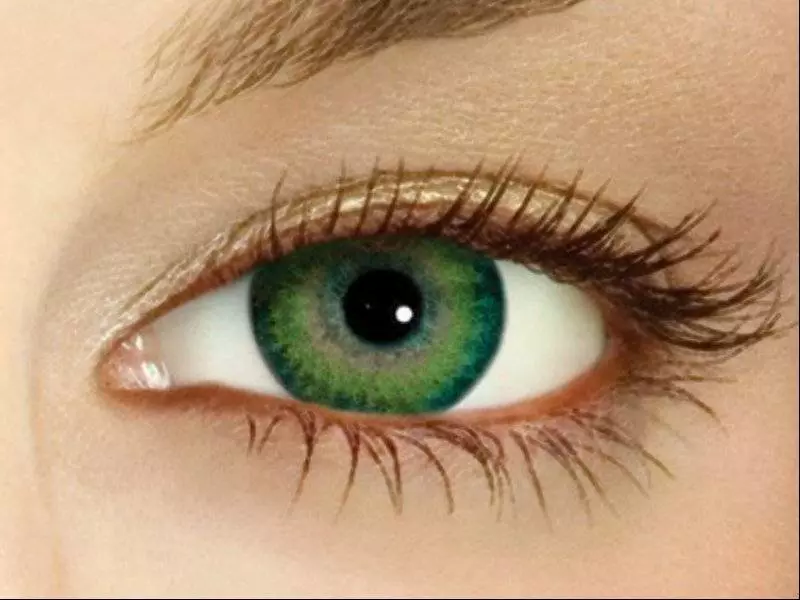
Colored Eye Colors
Colored eye colors refer to the variety of eye shades that occur due to different levels of pigmentation in the iris. These colors typically include blue, green, hazel, and gray tones. The variation in these colors depends on the amount of melanin present in the iris. As melanin levels decrease, eye colors tend to appear lighter.
Colored eyes tend to attract attention, especially when rare shades are involved. Nature favors diversity, and for this reason, colored eye tones are admired in many cultures. People often perceive these eye colors as aesthetically pleasing and unique, which can increase interest in individuals who have them.
Colored eye colors are determined by genetic factors. The combination of genes inherited from parents defines an individual’s eye color. The inheritance of eye color is a complex process, and in addition to genetics, environmental factors may also play a role. Therefore, genetic diversity is an important factor in the emergence of colored eyes.
Psychological Effects of Colored Eye Colors
Colored eye colors influence not only physical appearance but also psychological perceptions. Research suggests that individuals with certain eye colors may be associated with specific personality traits. For example, people with blue eyes are often perceived as calm and peaceful.
Having colored eyes can also increase self-confidence. Striking eye colors may make individuals feel more attractive, which can positively affect their confidence. This can provide advantages in both social relationships and professional life. This sense of confidence is often noticeable to others.
On the other hand, colored eyes may sometimes lead to misunderstandings. Social stereotypes can create biases suggesting that people with certain eye colors behave in specific ways. These assumptions may make it more difficult for individuals to fully express their identity and potential. Therefore, when evaluating the psychological effects of eye color, it is important to consider personal experiences and emotions.
Most Common Colored Eye Colors in the World
Globally, the most common eye colors include brown, blue, green, and hazel. Brown eyes are the most widespread, especially in Asia and Africa, due to higher melanin levels.
Blue eyes are commonly found in Northern European countries. In these regions, the genetic traits associated with blue eyes are more prevalent. Because blue eyes contain less melanin, they often appear brighter and more noticeable, which can attract more attention.
Green eyes are rarer worldwide and are more commonly seen in Western Europe and the Middle East. Green eyes can appear in different shades depending on lighting conditions, making them especially interesting. Hazel eyes, which are a mix of brown and green, tend to have a variable appearance and are commonly found in Europe and the Americas.
Genetic Structure of Colored Eye Colors
Eye color is a complex result of genetic inheritance. Colored eye colors emerge through the interaction of multiple genes. These genes control the level and distribution of melanin in the iris. Two key genes, OCA2 and HERC2, play a critical role in determining eye color.
The OCA2 gene encodes a protein that influences melanin production, while the HERC2 gene regulates the expression of OCA2. Different versions (alleles) of these genes contribute to the diversity of eye colors. For example, blue eyes occur when the OCA2 gene is less active.
Eye color inheritance is more complex than simple Mendelian genetics. Multiple genes interact to create new color combinations. Additionally, mutations and environmental factors may also influence eye color. For this reason, colored eye colors are a highly diverse and fascinating genetic trait.
Relationship Between Colored Eye Colors and Personality
Colored eye colors are also associated with personality traits. Various studies suggest that eye color may influence behavior and personality characteristics. For example, blue-eyed individuals are often described as calm and emotional, while brown-eyed individuals may be perceived as strong and having leadership qualities.
Green eyes are commonly associated with mysterious and creative individuals. People with this eye color are often known for their originality and innovative thinking. Hazel eyes, due to their variable nature, are often linked to flexible and adaptable personalities. While these generalizations may reflect certain observations, it is important to remember that every individual is unique.
In conclusion, the relationship between colored eye colors and personality is still being studied. It should be evaluated based on observations rather than definitive judgments. While eye color may offer some insights, individual experiences and personal characteristics go beyond such associations.
 Call
Call
 Whatsapp