
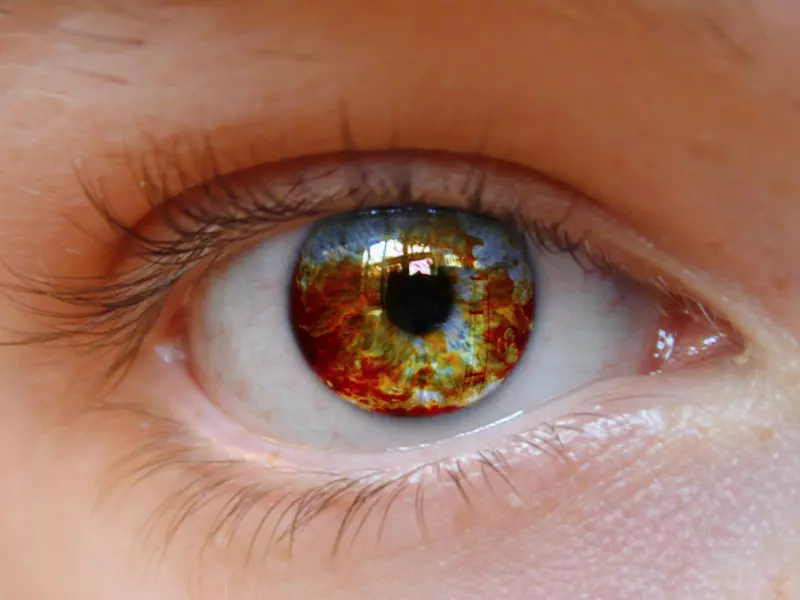
Are Colored Eyes a Mutation?
Whether colored eyes are the result of a mutation has been a long-debated topic in the scientific world. In this article, we will examine the genetic foundations of colored eyes to better understand whether these striking eye colors are truly caused by mutation. The diversity of eye color is fascinating for many people, and this guide aims to explain the topic in detail.
What Is Eye Color and How Does It Form?
The most important factor determining eye color is the melanin pigment accumulated in the iris. The amount and distribution of melanin directly affect eye color. Eyes with higher melanin levels are usually brown, while those with lower melanin levels can appear blue or green. The refraction and scattering of light also influence the tone of eye color, leading to variations between individuals.
Research on the genes responsible for eye color helps us understand how these traits are passed down through generations. Genetic diversity plays a major role in the formation of eye color and leads to a wide range of variations across populations. Scientists analyze DNA to better understand this complex process.
Understanding how eye color forms also provides insight into eye health and potential conditions. For example, individuals with lighter eye colors may be more sensitive to light and therefore need to protect their eyes from excessive sunlight.
Genetic Foundations of Colored Eyes
The genetic basis of eye color results from the interaction of multiple genes. Genes such as OCA2 and HERC2 are among the most influential in determining eye color. The OCA2 gene, in particular, controls melanin production, directly affecting eye color. Variations in these genes explain the diversity of eye colors.
Genetic research has shown that eye color is too complex to be explained by simple Mendelian inheritance. While it was once thought to be controlled by just two genes, it is now known to be a polygenic trait, meaning it is influenced by multiple genes. This complexity explains the wide variety of eye colors observed in humans.
Understanding the genetics of eye color also provides insights into human evolution and genetic adaptations. The variation in eye color across different regions helps scientists study how environmental factors influence genetic traits over time.
What Is a Mutation?
A mutation is a permanent change in an organism’s DNA sequence. These changes can occur during DNA replication or as a result of environmental influences. Mutations are a key source of genetic diversity and play an important role in evolution.
Although mutations are often perceived as harmful, they can sometimes have beneficial effects. For example, a mutation may help an organism better adapt to its environment. As a result, mutations influence survival and reproduction, playing a critical role in natural selection.
The impact of a mutation depends on the function of the gene and the extent of the change. Small changes may have little effect, while larger changes can lead to significant differences in physical traits or even genetic disorders.
The Relationship Between Colored Eyes and Mutation
The connection between colored eyes and mutation is still a subject of scientific discussion. Research suggests that blue eyes originated from a mutation. It is believed that a mutation in the OCA2 gene led to the development of blue eye color. This mutation may have appeared approximately 6,000 to 10,000 years ago in Europe.
This mutation reduced melanin levels, resulting in lighter eye color. However, it is still unclear whether this mutation provided any evolutionary advantage. Some theories suggest that people living in regions with lower sunlight may have developed lighter eye colors to better adapt to environmental conditions.
Understanding the relationship between eye color and mutation helps us learn more about genetic diversity and evolutionary adaptation. These studies contribute significantly to the fields of human genetics and evolutionary biology.
Global Distribution of Eye Colors
The distribution of eye color worldwide is a clear example of genetic diversity. Eye color varies depending on geographic location and genetic background. For example, blue and green eyes are more common in Europe, while brown eyes are more prevalent in Africa and Asia.
| Region | Common Eye Colors |
|---|---|
| Europe | Blue, Green, Brown |
| Africa | Brown |
| Asia | Brown, Black |
| Middle East | Brown, Green |
| Americas | Brown, Blue |
This diversity is the result of genetic mixing and historical migration. As populations moved and adapted to different environments, their genetic structures evolved, leading to variations in eye color across regions.
Eye color distribution can also be influenced by cultural and social factors. In some societies, certain eye colors may be associated with beauty or status, shaping how these traits are perceived. This makes eye color not only a biological feature but also a topic of social interest.
 Call
Call
 Whatsapp